


The future of Houston’s energy industry isn’t being written in boardrooms alone. It’s taking shape in packed conference halls, startup pitch sessions, and the hallway conversations that happen in between. Over the past few months, Sidney Sirdashney has been in those rooms, listening to the founders, operators, and investors driving what comes next.
For us, showing up isn’t optional. It’s how we stay close to the industries we serve: what’s shifting, what they need, and where they’re headed. Everything we hear comes back with us and shapes the work we do for our clients.
Here’s what stuck with Sidney, from the main stage to conversations over cocktails.
Every Founder Has a Story. An Activate Houston Workshop.
Tell me about the storytelling workshop you helped lead for the Activate fellows. What was the experience like?
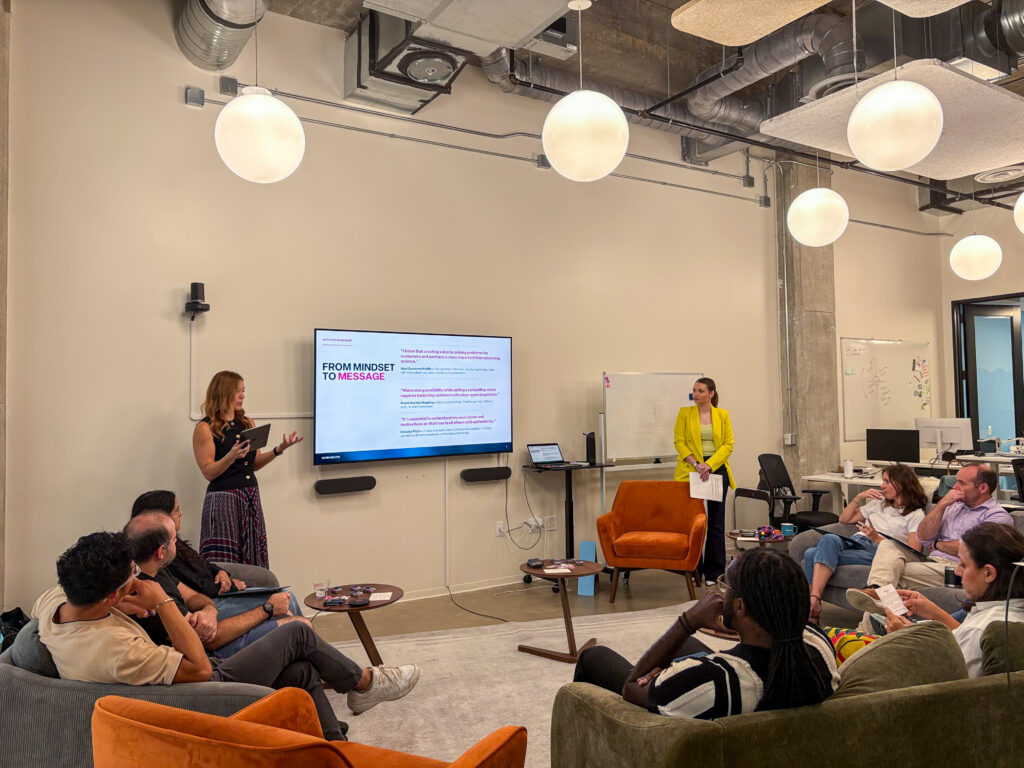
Activate Houston invited Raven Dreibelbis and me to lead a storytelling workshop for their 2025 and 2026 cohorts. We joined the fellows in their space at The Ion and walked them through why a strong story matters when you’re selling your product or service, whether to investors or customers, and how a compelling narrative shapes the way people see your company. It was a really intimate and welcoming experience. We even stayed for a happy hour afterward, which gave us a chance to get to know the founders on a more personal level.
What’s the hardest part of telling a story when you’re coming from a science or research background?
The hardest part is resisting the urge to lead with the science. When you’ve spent years developing a technical product, it’s natural to want to explain exactly how it works. But in a short pitch, the people you’re talking to need to buy into the problem before they’ll care about the solution. So the story has to start with your ideal customer and the challenge they’re facing. Then you introduce your solution at a high level and make it clear why it matters to them. The technical detail can come later, once they’re already interested. And it needs to feel personal. Investors and customers want to know who you are and why you’re the one solving this, so share your background, just keep it focused on what led you to the problem rather than every step of your research.

What’s one piece of advice from the workshop you’d give any early-stage founder pitching to investors?
Know exactly who you’re talking to. Your core story stays the same, but how you tell it should change depending on who’s across the table. It’s completely fine to have a slightly different pitch for each investor or audience. The goal is to connect your solution to a problem that person cares about, not just a broad industry challenge. When an investor hears a pain point they recognize from their portfolio or their own experience, that’s when you’ve hooked them. And practice. The more you tell your story out loud, the easier it becomes to adapt it in the moment.
The Energy Industry Is Evolving. REAL IMPACT Showed What’s Next.
The REAL IMPACT Conference agenda covered grid reliability, data centers, energy storage, and where capital is heading. What stuck with you most, and why?
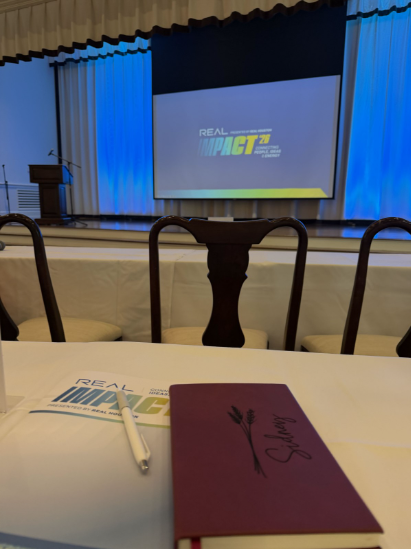
What stuck with me most is how critical time to market and time to power have become. The buyer a year ago is completely different from the buyer today, and that theme came up in nearly every session. Hill Vaden from S&P Global set the stage with the data. After more than a decade of stagnation, energy demand is growing again, and capital markets remain broadly supportive of energy startups, driven largely by the excitement around AI. Next-generation geothermal alone has attracted nearly $5 billion in investment. My favorite analogy of the day came from Brian Hayes of Key Capture Energy, who compared battery storage to a gas station, specifically Buc-ee’s. You don’t just stop for gas; you get refreshments, merchandise, and a whole experience in one place.
REAL IMPACT was a full day of programming. From a marketing and engagement perspective, what did the organizers do well that other brands hosting all-day conferences should borrow?
One thing REAL IMPACT did really well was keeping the audience involved between sessions. Before each panel, host Kay McCall put a question on the screen and had the audience vote. The answer was then revealed during the upcoming panel or presentation, so everyone had a reason to listen closely and see if they got it right. It’s a simple tactic, but it’s one I’d encourage any brand hosting an all-day event to borrow. It turns passive listening into participation, builds a little anticipation before each session, and helps the audience retain the key takeaways, which is exactly what you want when you’re asking people to stay engaged for a full day.
Powering the Future of Energy. Startup Week Showed Us Who’s Leading It.
Which HECSW events did you make it to, and what themes kept coming up across the week?
I made it to NordicLink, the Kickoff + Open House + Block Party, and the Houston Climatetech Summit. Across the week, a few themes kept coming up: nuclear, AI, clean energy, and scaling. Whether it was a panel discussion or a networking happy hour, those topics were never far from the conversation.
What’s the most memorable event you attended and what could other brands learn from how it was run?
Greentown Labs Climatetech Summit was a standout for me this year. During the morning panels at The Ion, each session was moderated by a member of the Greentown Labs team, which gave the day a consistent voice and kept every conversation tied back to the host organization. Two energetic hosts kept the day moving, and for every panel, an illustrator captured key moments from the discussion live on a whiteboard. By the end, each board was a visual summary of everything that was said, almost like a hand-drawn word cloud. It was a creative way to keep the audience engaged, and the finished boards became a spot where people stopped to take pictures.
For brands hosting their own events, that’s the lesson: find ways to make the content visible and tangible. A live illustrator, a visual recap, or anything that turns a conversation into something people can see helps the ideas stick and gives attendees something worth sharing.

What did HECSW 2026 show you about where Houston’s energy and climate ecosystem is headed?
It showed me that Houston’s role as the energy capital of the world is only growing. Startups from across the globe are recognizing the value of being here, because Houston has the talent, the leadership, and the legacy organizations needed to get things done. What stood out most was the creativity. From wind to battery storage, so many founders are working on a wide range of solutions, and many of them have the potential to disrupt the industry and make a dent in how we consume and use energy.
Every Event Left a Lesson. Here’s What It Means for Your Brand.
Looking back across the past couple of months of events, what’s your biggest takeaway?
There is so much urgency in this space right now. Every event, whether it was a packed summit or a casual open house, was full of people eager to connect, share ideas, and figure out what’s next. The conversations aren’t just happening on stage. They’re happening in the hallways, over coffee, and at the block party, and that’s where a lot of progress starts.
What conversation from any of these events are you still thinking about?
I’m still thinking about a moment at REAL IMPACT when batteries were referred to as the little black dress of the industry. It’s such a simple comparison, but it stuck with me because it captures how versatile battery storage has become.
With so many events competing for attention in Houston, how can brands make theirs stand out and get the right people in the room?
It starts with being clear about what your audience gets out of showing up. When you’re marketing an event, every piece of content should communicate the outcome: what attendees will learn, who they’ll meet, and why it’s worth their time. When that value is obvious, you create a sense of FOMO that makes people want to be in the room.
“An event isn’t a one-day moment. It has a before, a during, and an after, and the after is where a lot of brands drop off.“
Before the event is over, you should already know what you want attendees to do next and how you want them to feel when they leave. Maybe it’s signing up for the next event, connecting with your team, or continuing the conversation online. When you’re clear on that from the start, every piece of content has a purpose, and your event marketing stands out long before and after the doors close.
Houston’s energy conversations move fast. Being heard starts with knowing who’s listening. If you have an event, a pitch, or a story that needs to land with the right people, let’s start that conversation.