

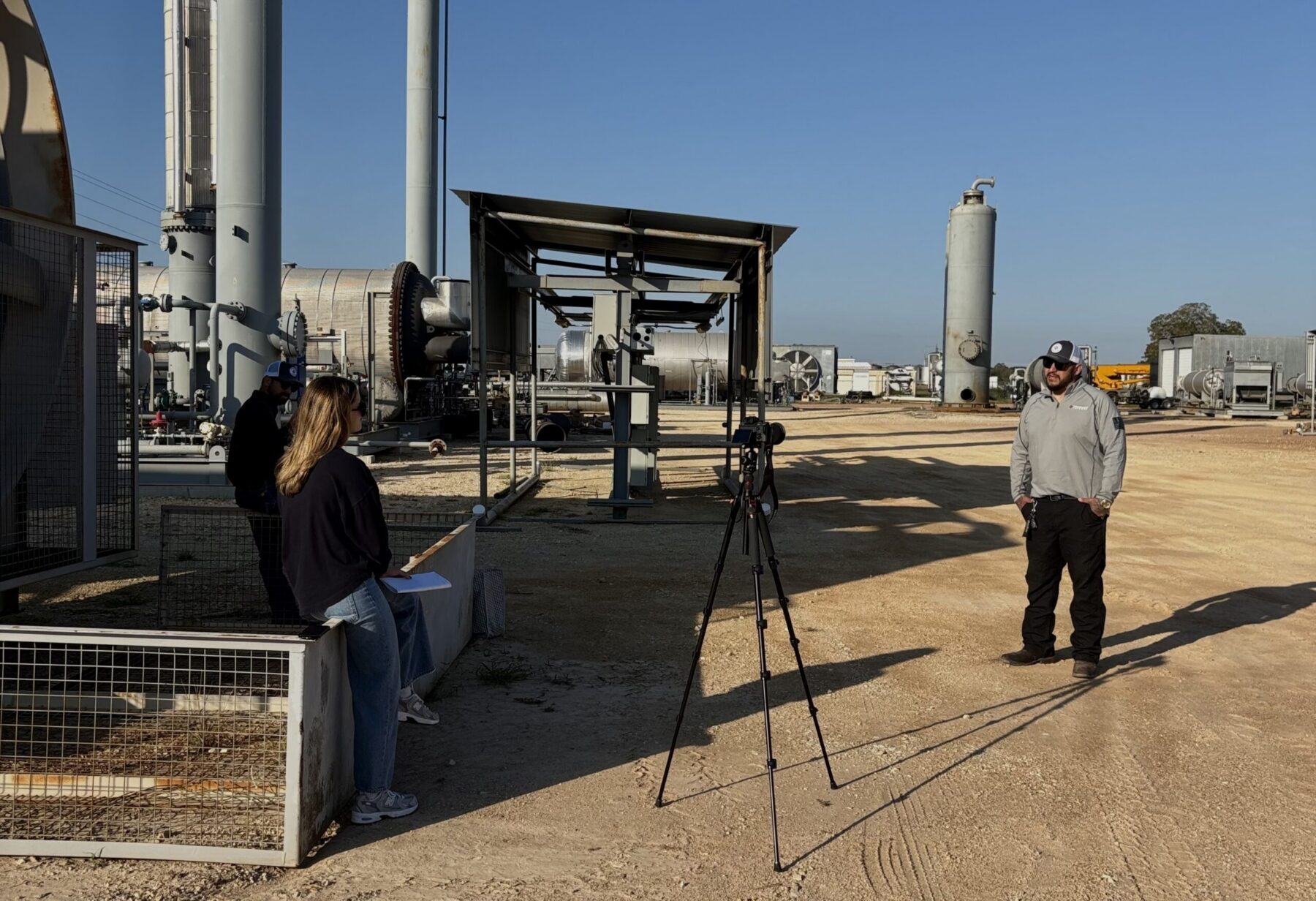
Every marketing team knows the struggle. Some of the best content comes from subject matter experts, engineers, and leaders, and they can also be the hardest people to pin down. Their calendars are packed, and a request for “30 minutes to talk through a topic” can sit in an inbox for weeks.
So instead of asking for a little time every week, we ask for a couple of hours once a quarter. We call it a media day: one planned session where a brand’s experts sit down on camera and talk through what they know best. Those two hours then fuel a full quarter of content.
Why media days work
Two focused hours produce 12–15 short clips, ready to drop straight into your social calendar. But the clips are just the output. The real value is the expertise your team shares in them. Each clip teaches your audience something useful and expects nothing in return. That’s the philosophy behind every media day: give before you ask. Over a quarter, that steady stream of useful insight builds the kind of credibility you can’t pay for, and your experts become the most knowledgeable, trusted voices in your market.
Where do you start?
Before you schedule a media day, look at your own data. What is your audience engaging with? Which platforms are they on, and which formats perform best?
Then look outward at what your competitors are posting, and find the gaps: the questions nobody is answering that your experts are ready to take on. If everyone in your industry is posting product shots and nobody is explaining how the work actually gets done, that gap is your opportunity.
Your content needs a solid foundation
Every video you plan to shoot should tie back to your brand’s content pillars, the handful of core themes your content is built around. Pillars give you a head start. Instead of facing a blank page, you can work from each pillar to find topics your experts are ready to speak to. They also keep your content focused. When every clip traces back to a pillar, nothing you film is content for content’s sake, and two hours of filming becomes a quarter of content with purpose.
Don’t have content pillars yet? See how our Disruptor Core can help you define them.
How do you decide what to film?
With your pillars in place, it’s time to brainstorm. For each media day, we narrow things down to 5–8 core ideas. Then every idea runs through the same planning outline:
Sometimes the gap isn’t inconsistency, it’s absence. Tres Energy had the track record and operational expertise to compete at the highest levels of energy investment, but their website was a placeholder with no team page and no portfolio, so a co-investor doing due diligence had nothing to check the claims against. We built both, and the site started doing what a trust-building asset is supposed to do: give buyers proof before they ever ask for it.
- Content pillar: the overarching theme the idea falls under
- Core idea: the headline, or the big idea we’re building around
- Topic: the specific question the content answers
- Topic details: what the piece should communicate to the viewer
- Interview questions: 5–10 per core idea, written to draw out the knowledge of your experts
- Talking points: prompts that keep the talent on track
- Interview talent: who speaks to which idea
The interview questions do the heavy lifting. Each answer can stand on its own as a clip, so a single core idea turns into several pieces of content.
Your core ideas don’t have to start from scratch, either. Some of the strongest come from blog posts you’ve already published. Ask 5–10 questions on the post’s topic, and you’ll walk away with standalone clips for social plus a few promo videos that point viewers back to the original blog. Your video and written content end up working together to carry the same message.
Collaboration before the camera rolls
Never walk into a shoot with ideas your talent hasn’t seen. Before media day, sit down with your subject matter experts, walk through each core idea, and invite them to push back.
Marketers know what makes content work, and experts hear the questions customers ask firsthand. Together, you’ll sharpen angles, broaden topics drawn too narrowly, and cut ideas that don’t add enough value. Once the ideas are locked in, match each one to the expert best suited to speak on it, and you’re ready for the shoot.
How should you set the scene?
Before anyone sits down in front of a camera, decide how you want your content to look and feel. A mood board gets everyone picturing the same final product before filming starts. As you build yours, work through these questions:
- Tone: What should your content feel like: relaxed and conversational, or more polished?
- Setting: Where will you shoot, and does the space have good natural light? What small touches, like a plant or a few books, would add interest without pulling focus?
- Location: Have you scouted the space ahead of time? Are there enough spots for a few different setups, and does the building have any rules about filming?
- Camera approach: How will you frame each shot? Which moments call for an off-camera angle that feels conversational, and which call for speaking directly to camera?
- Wardrobe: What should your talent wear to reflect your brand’s personality?
use your time wisley
On the day, keep it loose. Ask your questions and let the conversation go where it goes. A few setups help you get more out of the same two hours:
- Conversational pairs: Seat two experts side by side. Ask one a question and let the other jump in with their own insight. It feels like a real conversation and gives editors more to cut between.
- Overlapping questions: Ask more than one expert a similar question. You’ll get different takes on the same topic and more options in the edit.
- A rotating cast: Film at least three people per media day, so your audience has a range of faces and voices to connect with.
How do you turn one shoot into a quarter’s worth of content?
After the shoot, edit each answer into a clip of about 30 seconds that makes sense on its own. Lead with the strongest line, trim the warm-up, and end on a thought that lands. If one answer holds two good ideas, split it into two clips. Then finish each clip for the way people actually watch: add captions for viewers scrolling with the sound off, put the speaker’s name and title on screen, and crop to fit the platform.
From there, post where your audience already spends time. For most B2B brands that means LinkedIn first but let your analytics make the call.
Video works best as one part of the mix. Posting one or two clips a week, with static graphics, carousels, and reposts filling the days between, keeps your channels varied and stretches your clips across a full quarter. Map them into your calendar ahead of time, and you’ll never be scrambling for something to post.
We practice what we preach.
We don’t just recommend media days. We run them for ourselves every quarter.
Each one adds a fresh batch of clips to Raven Creative’s content library, and since we don’t always use every clip in the quarter it was filmed, the strongest ones stay in rotation. Over time, that library grows into a deep bank of content to draw from.
We track every clip, what’s been used and what’s still available, so when it’s time to plan the next quarter, we know exactly what we have and how much more we need to film. It’s the same process we bring to every client.
Turn everyday expertise into lasting trust
Every day, your experts field customer questions on calls, in meetings, and out in the field. Their answers are some of the most valuable content your brand has. A media day puts those answers on camera, so the insight that wins business one conversation at a time can reach your whole market. Clip by clip, you build trust with buyers long before they ever reach out.
The expertise is there. Let’s make sure the right people see it. Get in touch.
Published October 2026 by Suzanne Morgan